Showing posts with label Science. Show all posts

Wednesday, 25 July 2018

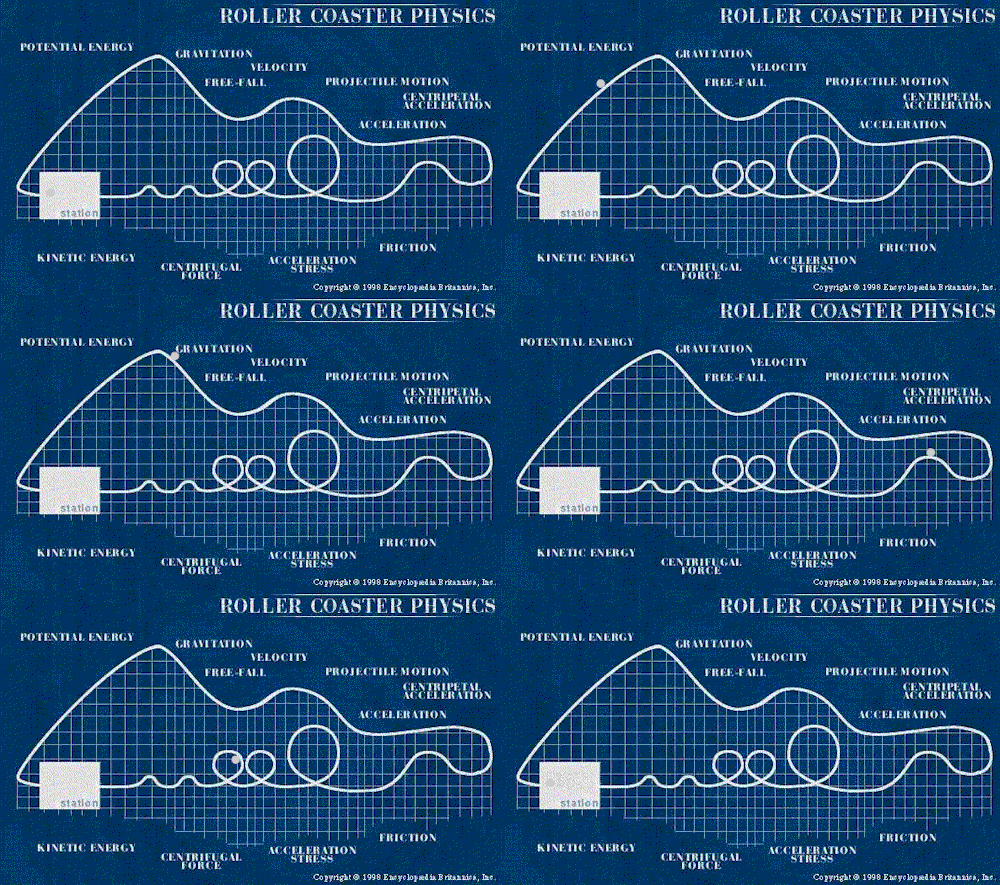
Roller Coaster Physics


Roller Coaster Physics.

The principle that underlies the working of a roller coaster is simple. As you ascent to the top, your potential energy builds up. ( i.e the higher you go, longer the distance that the force of gravity can act upon)
This built up Potential energy gets released as kinetic energy downhill. ( Kinetic energy is the energy of motion- linear and rotational). 
Now what Roller Coaster Engineers do is abuse this principle to engineering perfection.

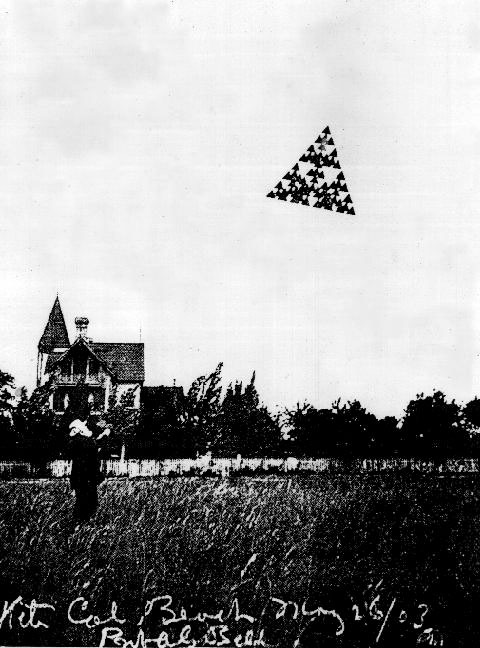
Tetrahedral kites by Alexander Graham Bell, (1898-1912)


How Old is Your Body Really?


Wednesday, 4 July 2018

Mystic Mountain

This region of the Carina Nebula is known as ‘Mystic Mountain’ - a three-light-year-tall pillar of gas and dust containing jets of gas being emitted by infant stars. source

Tuesday, 21 February 2017

Space Artists's Concepts for Unseen Planets

Check out npr  to see the process behind designing concept art for newly discovered planets. It is fascinating!

'This artist's impression shows a best guess of what the surface of the planet 
Proxima b might look like, as it orbits the red dwarf star Proxima Centauri, the 
closest star to our solar system. Maybe Mars was the model?'
M. Kornmesser/ESO

You MUST Watch this Video

Earth's history is laid out to scale on a football field. A VERY cool timeline.


Giant Creatures


Full story here. And here’s our rhyming round-up of other ancient, giant versions of modern mammals:


Glow Worms


Image Credit: Janek von Byern, GIF’d by Maddie Sofia

Where in the World Have New Diseases Emerged?


"What new viruses are emerging in your backyard? 

If you’re a germaphobe, make sure you’re sitting down.
Back in 1999, a woman in California cleaned up rodent droppings in her home. Two weeks later, her liver started failing. Then she started to bleed internally — a hemorrhagic fever that would kill her. Eventually doctors found a new virus in her body, which very likely came from a rat.
A few years later, a man in Arizona went to the hospital. The skin on his legs was infected and dying. Doctors had to amputate. His diagnosis? A new kind of leprosy.
Over in the Midwest, the problem has been new tick-borne diseases, some deadly. And in New England, doctors are dealing with a disease that causes Lyme-like symptoms but is caused by a different bacteria.
The pattern continues across the country and across the world. A spike in new infectious diseases is the new normal.
      Another side effect of humanity’s conquest of the natural world."

Frog Spit is a Non-Newtonian Fluid


"The researchers used high-speed photography and an instrument called a Rheometer to analyze frog saliva under prey-capturing conditions.­­­­­­­ The scientists think frog tongues could one day help engineers design reversible soft adhesives that could work at high speeds.
Read more about it here."

Dye that Changes Colour Like a Moodring


"Color-changing hair might seem like something out of a fantasy novel, but Lauren Bowker of The Unseen has made it a reality. Bowker, a chemist and fashion designer, is known for her “high-fashion alchemy.” She’s previously created hue-shifting purses as well as other air sculptures that use science to produce a stunning visual effect. Now, she’s turning her attention towards color-changing hair dye that’s controlled by temperature—when there’s a dramatic spike or drop, the dye seemingly has a mind of its own... Each hue reacts to either bodily or environmental temperatures. Blushing, for instance, causes your body temperature to rise and as a result, a shift in color... Weather is also a factor. With one color combination, stepping into chilly weather shifts blonde hair to a fitting icy blue."


Tuesday, 2 August 2016

Roald Dahl Science

Emma Vanstone has collected different science activities (apropriate for junior students and possible to adapt for older students) that relate to Roald Dahl and his books.

http://www.science-sparks.com/2015/09/11/roald-dahl-activity-ideas/

Tuesday, 26 July 2016

Scale of the Universe

'This amazing video illustrates the scale of over 100 items within the observable universe ranging from galaxies to insects, nebulae and stars to molecules and atoms.'

source

Conductive Silver Ink Pen

'Circuit Scribe is a rollerball pen that writes with conductive silver ink. It makes creating circuits as easy as doodling.'

source

Tuesday, 5 July 2016

Chernobyl/Pompeii

This headline and photo would be a great prompt for senior students:

Why the Chernobyl Nuclear Ruins Are a 20th-Century Pompeii

PHOTOGRAPH BY ROBERT MAXWELL
Read full article here

Tuesday, 14 June 2016

The bold and unusual Sweet Petite Acanthanura

"Sweet Petite Acanthanura
Almost every time I head out into the Dandenong Ranges (Melbourne, Australia) - at this time of year (autumn) - I find an Acanthanuraspringtail. They are usually active on the surface on the surface on wet, mossy, logs: diurnally. Perhaps they are out at night too but it’s more difficult taking pictures at in the dark especially at high magnifications. Mostly I find fully grown adults, stunning animals that they are.

This week I found a baby. At least I’m guessing it is likely the baby of the species I commonly see as a grown up in the area. It was about 2.5 mm long (1/10 inch) and very quick, foraging on the surface of the log, not cryptically like most collembola, but openly. Do the spines and colours scream ‘don’t eat me’ even for something this small?"


See Before-and-After Photos of the Changing Environment

"Side-by-side comparisons reveal just how much glaciers, lakes, and snowpacks have been altered by nature and humans.
From the ice sheets of Greenland to the deserts of Arizona, many of the world’s landscapes
have been dramatically transformed as their climate grows warmer and drier. At the same 
time, water use and other human activities have altered many landscapes. NASA has 
accumulated striking photos that show just how much our surroundings have changed. 
Slide across each image to see before and after pictures."

http://news.nationalgeographic.com/2015/12/151229-before-after-earth-features/

This is a great site to show relating to Change - you are able to slide across the images to show the contrast between the before and after images.

Wednesday, 25 May 2016

Magnets and Marbles

Here we have an incredible marble track which incorporate different sized magnets used to repel and attract in order to further the marble track.

This is great for discussions/examples of magnets and force.

Tuesday, 24 May 2016

Changes

Though very simple, this image can be a great strating off point for discussion of changes.

Tuesday, 8 March 2016

Farming Preschool Teaches Kids How to Grow Their Own Food

From Sara Barnes at My Modern Met

"In the age of convenience—instant digital technology and fast food—it can be hard for kids to feel connected to nature and to what they eat. With this in mind, Rome-based designers Edoardo Capuzzo Dolcetta, Gabriele Capobianco, Davide Troiana, and Jonathan Lazar have created an innovative way to introduce children to the outdoor environment. Their proposal—which recently won the AWR International Ideas Competition—is called Nursery Fields Forever, and it combines urban farming with a preschool education.


Nursery Fields Forever offers three approaches to learning: from nature; from technique; and from practice. Children will be taught to grow and harvest their own food, as well as interact with animals. These tasks, though small ones, can have a positive effect on kids' everyday lives. The hands-on method instills valuable social skills, teamwork, and promotes a healthy lifestyle from a young age. At the same time, students will also learn about the benefits of renewable energy—including wind turbines and solar arrays—that keep the school running.
“We think that kids should enjoy nature,” Dolcetta told Fast Company. “So we designed this strange school: No classrooms, but open spaces where vegetables grow inside and animals can come in too. It’s a mixing of the two things, school and nature.” With this model, children are engaged in learning that will inspire them to think differently. "A typical school has desks and chairs—in our school, there are not these things. And there's the freedom to stay inside or go outside."