Showing posts with label Living World. Show all posts
Showing posts with label Living World. Show all posts
Wednesday, 25 July 2018

Tuesday, 21 February 2017
You MUST Watch this Video
Earth's history is laid out to scale on a football field. A VERY cool timeline.
Giant Creatures


Full story here. And here’s our rhyming round-up of other ancient, giant versions of modern mammals:


Frog Spit is a Non-Newtonian Fluid


"The researchers used high-speed photography and an instrument called a Rheometer to analyze frog saliva under prey-capturing conditions. The scientists think frog tongues could one day help engineers design reversible soft adhesives that could work at high speeds.
Read more about it here."
Tuesday, 14 June 2016
The bold and unusual Sweet Petite Acanthanura
"Sweet Petite Acanthanura
Almost every time I head out into the Dandenong Ranges (Melbourne, Australia) - at this time of year (autumn) - I find an Acanthanuraspringtail. They are usually active on the surface on the surface on wet, mossy, logs: diurnally. Perhaps they are out at night too but it’s more difficult taking pictures at in the dark especially at high magnifications. Mostly I find fully grown adults, stunning animals that they are.
This week I found a baby. At least I’m guessing it is likely the baby of the species I commonly see as a grown up in the area. It was about 2.5 mm long (1/10 inch) and very quick, foraging on the surface of the log, not cryptically like most collembola, but openly. Do the spines and colours scream ‘don’t eat me’ even for something this small?"


Tuesday, 24 May 2016

Tuesday, 1 March 2016
Living Bridges and Systems for the Wettest Place on Earth
"Meghalaya, India, is reportedly the rainiest spot on Earth. The village of Mawsynram in Meghalaya receives 467 inches of rain per year. Laborers who work outdoors often wear full-body umbrellas made from bamboo and banana leaf.
One of the most fascinating and beautiful features in the region are the "living bridges" spanning rain-soaked valleys. For centuries, locals have been training the roots of rubber trees to grow into natural bridges, far outlasting man-made wooden structures that rot in just a few years. The bridges are self-strengthening, becoming more substantial over time, as the root systems grow."
Imgaes by Amos Chapple
The article also shows the different systems the citizens have in place to deal with the rainfall and the effects it has.


Wednesday, 16 September 2015
The Glasswinged Butterfly

"The Glasswinged Butterfly.
The pretty creature, who is a native of Mexico and South America, does not lack the tissues that make up a full wing, but rather the coloured scales that other butterflies have."
Saturday, 8 August 2015
14 Bizarre Animals That Could Totally Pass as Pokemon

Jerboa
Jerboas are hopping rodents that thrive in the deserts of Northern Africa and Asia. Despite their status as prey animals, these adorable kangaroo-like creatures make do just fine thanks to their excellent hearing and ability to run up to 15 miles per hour.
* * *

Mantis shrimp
Also known as "thumb splitters," these vibrant crustaceans are named in honor of their powerful claws, which can spear, stun and dismember prey with 200 pounds of force. In addition to their predatory tendencies, mantis shrimp are also distinguished for their impressive visual capabilities. The eyes of these psychedelic sea critters are equipped with 12 color receptors — humans and most other animals only have three. Scientists speculate this might enable them to process color information quickly within the eye instead going through the brain.
* * *
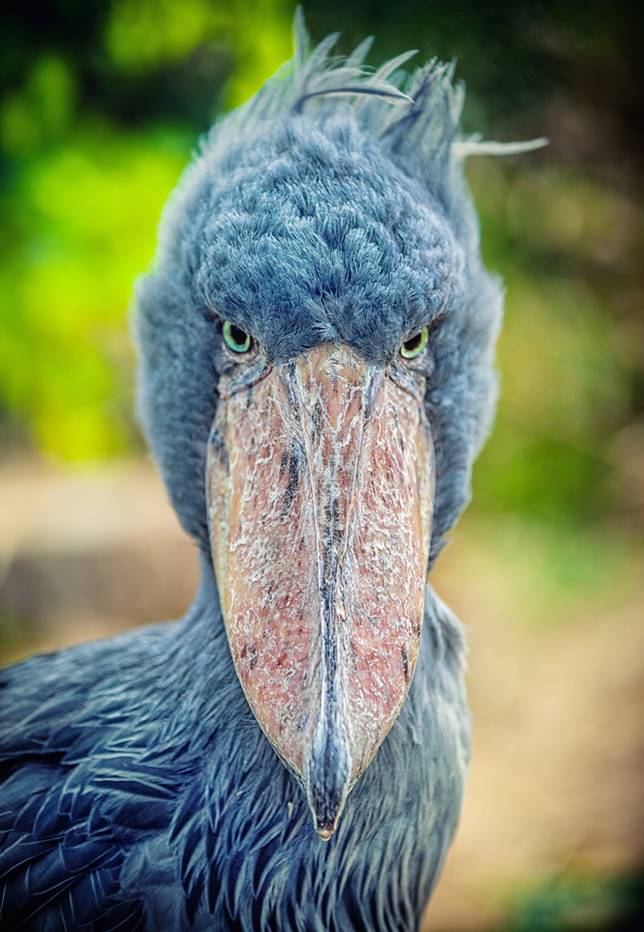
Shoebill stork
Native to the freshwater swamps of tropical east Africa, these large, cartoon-like avians are known for their uniquely bulbous beaks. They are classified as a "vulnerable" species due to human disturbances, habitat destruction and hunting.
* * *

Blobfish
The frowning, gelatinous blobfish is considered one of the world's ugliest animals, but it actually looks quite different in its native deep sea environment. As a frequent victim of bycatch, the sad, slimy creature may soon be added to the growing list of endangered species.
* * *

Gharial
The long, thin jaw of the gharial may appear quite frightening to many folks, but have no fear — it is an adaptation developed in response to the creature's fish-heavy diet. Sadly, the global population numbers for this critically endangered Indian crocodile are currently estimated at less than 235 individuals, due to loss of their river habitat, depletion of food sources and fishing nets.
* * *

Fennec fox
Hailing from the arid, scorching sands of the Sahara desert, these cute nocturnal canids are known for their extra large ears, which dissipate heat and are sensitive enough to allow them to hear prey from underground.
* * *

Glaucus Atlanticus
You might be surprised to learn that this beautiful sea critter (also known as a sea swallow or blue dragon) is actually a sea slug. The blue and silvery mollusk is known to feed off cnidarians like the venomous Portuguese Man o' War. What makes these gorgeous slugs even more fascinating is their practice of storing the cnidarians's stinging nematocysts within its own tissues — ensuring a painful sting to anyone who messes with it.
* * *

Okapi
These unusual creatures were once mistaken by early European explorers as "African unicorns" before being formally recognized and classified as Okapia johnstoni in 1901. Although they may bear zebra-like stripes, these endangered ungulates are more closely related to giraffes.
* * *

Bush viper
Found in the tropical rainforests of subsaharan Africa, bush vipers are venomous snakes known for their distinctly keeled scales. Their strong prehensile tails are perfect for supporting their weight in trees, where they spend the majority of their lives hanging and ambushing their prey.
* * *

Proboscis monkey
The clown-like, bulbous nose of this arboreal Old World monkey is hard to miss. Often exceeding 4 inches, the prominent proboscis is a result of sexual dimorphism; it is only found in males.
* * *

Lowland streaked tenrec
This quirky little guy is native to the tropical lowland forests of eastern Madagascar. The streaked tenrec is equipped with two sets of quills: barbed and nonbarbed. Similar to a porcupine, the barbed quills are used as a means of a defense against predators. The nonbarbed quills, on the other hand, are vibrated in order to emit a faint chattering that is used to communicate with family.
* * *

Coconut crab
Make no mistake — those tree trunks seen above are not saplings. That's right, those crabs are huge! Growing up to a meter in length from leg to leg, these terrestrial hermit crabs are the largest land-living arthropods in the world. Although they are omnivores that have been known to consume turtle hatchlings, they generally prefer to eat fleshy fruits and, you guessed it, coconuts!
* * *

Hummingbird hawk-moth
With its humming, hovering and long, thin proboscis, it's no wonder this species is having an identity crisis. That said, Macroglossum stellatarum is most definitely a moth, and its resemblance to a hummingbird is the result of convergent evolution.
* * *

Giant isopod
Along with the giant squid and the Japanese spider crab, these squirm-inducing arthropods are a prime example of deep sea gigantism. If you're not familiar with the giant isopod, look no further than the common wood louse, which is its terrestrial cousin. Both species have the ability to curl up into a ball to protect themselves from predators.
Wednesday, 22 July 2015


Saturday, 4 July 2015
Transparent Animals
"There are ghosts currently wandering the planet, but they aren't the undead apparitions of your imagination.
Transparent animals — creatures with transparent, glass-like skin — can be found lurking in abundance in ecosystems around the globe. These fascinating, verging-on-invisible organisms are the tangible ghosts of the real world.
Here's our list of 11 of the world's most intriguing transparent animals. (Text: Bryan Nelson)"

Barreleye: This unusual fish might be the most bizarre creature ever found lurking in the deep ocean. Sometimes called a "spook fish," no doubt because of its strange appearance, the barreleye has a completely transparent head.
The purpose of the clear head is that its eyes, which are located inside the head, can look straight up as it swims, presumably so that it can detect the silhouettes of available prey. Its eyes can rotate within the socket so that the fish can look in multiple directions, which would be impossible if not for the transparent cranium.
Check out this incredible video of a live barreleye as it swims.

Tortoise Shell Beetle: This remarkable beetle is not completely transparent, but it does have a carapace that is nearly invisible. The purpose of the transparent outer shell is to fool potential predators, as it reveals markings on its back that act as a warning.
Tortoise beetles come in many different varieties, and the design under their clear shells can be distinct and beautiful.

Glass Octopus: This unbelievable octopus is so ghostly and unusual that it occupies its own family, Vitreledonellidae. Little is known about this marine animal, but it can be found in tropical and subtropical waters around the world.
Thanks to its transparent skin, scientists know that its optic lobes have unusually long optic nerve stalks, meaning its sense of sight is acute. Your eyesight would have to be pretty good, too, to spot one of these ghosts.

Crocodile Icefish: These ghostly Antarctic predators are unusual because their transparent appearance is due in large part to nearly invisible blood. They are the only known vertebrates in the world without hemoglobin, the protein in blood that transports oxygen.
They survive without hemoglobin thanks to the subzero temperatures of the ocean where they live, since cold water has a much higher dissolved oxygen content than warmer water.


Jellyfish: Perhaps the most well-known types of transparent creatures are jellyfish.
Many of the free-swimming members of the phylum Cnidaria are transparent, a trait that makes them occasionally hazardous because of their sometimes deadly stings, which can surprise swimmers. Their translucent bodies also make them among the most elegant and beautiful of the ocean's creatures.

Salpas: Not to be confused with jellyfish, salpas are transparent, free-floating tunicates. Their gelatinous bodies swim by contracting and pumping water through internal feeding filters, feasting while they move.
They can be found anywhere, but they are probably most common in the Southern Ocean, where they sometimes form enormous transparent swarms.

Transparent Sea Cucumber: Recently discovered by researchers with the Census of Marine Life, this sea cucumber is so transparent that its digestive tract is on spectacular display.
Found at a depth of 2,750 meters, it is one of many unusual finds discovered by the marine census. When encountered, this cucumber was creeping forward on its many tentacles at about 2 centimeters per minute while sweeping detritus-rich sediment into its mouth.

Ghost Shrimp: The semi-translucent shells of these minuscule crustaceans make them nearly as transparent as the glass aquariums in which they are sometimes kept. In the wild, different species can be found in rivers and lakes throughout the world, including the central United States.
The animal is so clear in appearance that it only has color after it has eaten a colorful meal, which is typically plant-based and, therefore, usually green.

Glass Squid: There are about 60 different species of glass squid, so-called because many of them appear completely transparent. This transparency keeps them hidden from predators, since they spend much of their lives in partially sunlit shallow waters.
Many species are bioluminescent and possess light organs on the undersides of their eyes. Since the digestive gland can still be seen through the transparent skin, it is typically held in a vertical position to reduce its visibility.

Glasswing Butterfly: This butterfly with transparent wings has a Spanish name, "espejitos," which means "little mirrors." If it wasn't for the opaque outline around the wings, the average observer might not see one perched on a leaf or flower.
Adult glasswing butterflies will often migrate great distances, and males of the species are known to lek, or gather in large groups for the purpose of competitive mating displays.

Glass Frogs: Don’t worry … you aren't having a flashback to high school biology class. These amphibians of the family Centrolenidae are called glass frogs because the abdominal skin of many species is highly transparent, and viewing them from underneath is like looking at an MRI.
Many of the frogs’ internal organs, such as the heart, liver and gastrointestinal tract, are on display. Found in the jungles of Central and South America, these animals are mostly arboreal, meaning they live primarily in trees.
Subscribe to:
Comments (Atom)