Showing posts with label Maths. Show all posts
Showing posts with label Maths. Show all posts
Wednesday, 25 July 2018

Roller Coaster Physics
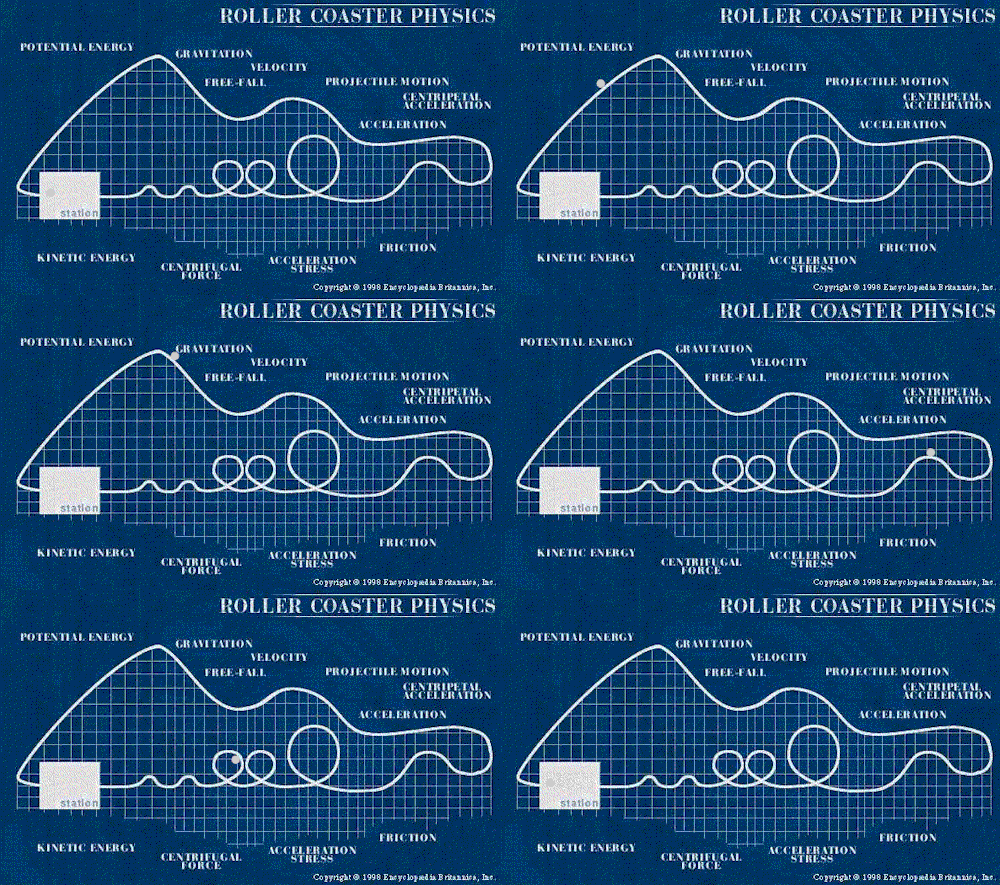
Roller Coaster Physics.
The principle that underlies the working of a roller coaster is simple. As you ascent to the top, your potential energy builds up. ( i.e the higher you go, longer the distance that the force of gravity can act upon)
This built up Potential energy gets released as kinetic energy downhill. ( Kinetic energy is the energy of motion- linear and rotational).
Now what Roller Coaster Engineers do is abuse this principle to engineering perfection.
Fly Mobius Strip
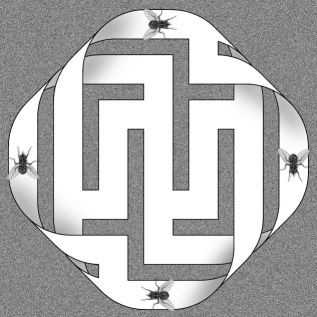
Mobius Fly Maze
Courtesy of David Phillips
"Find the path that the four flies take if they all travel the same route without meeting, and without retracing their path until they reach their original position. Keep track of which side of the path you are on."
Courtesy of David Phillips
"Find the path that the four flies take if they all travel the same route without meeting, and without retracing their path until they reach their original position. Keep track of which side of the path you are on."
This is an example of a Mobius Strip, where a surface has only one side and one boundary. It is mathematically 'unorientable'.


Can You Flatten a Sphere?
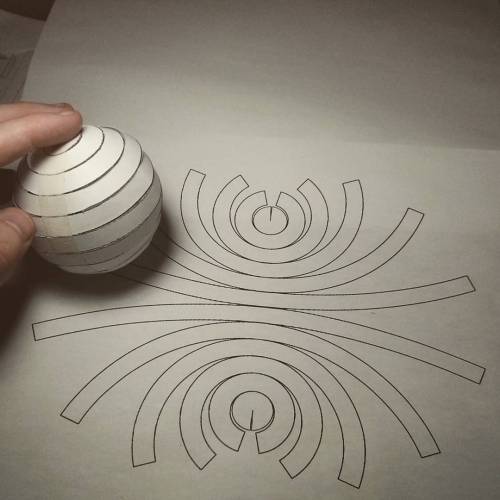
Can you flatten a sphere?
The answer is NO, you can not. This is why all map projections are innacurate and distorted, requiring some form of compromise between how accurate the angles, distances and areas in a globe are represented.
This is all due to Gauss’s Theorema Egregium, which dictates that you can only bend surfaces without distortion/stretching if you don’t change their Gaussian curvature.
The Gaussian curvature is an intrinsic and important property of a surface. Planes, cylinders and cones all have zero Gaussian curvature, and this is why you can make a tube or a party hat out of a flat piece of paper. A sphere has a positive Gaussian curvature, and a saddle shape has a negative one, so you cannot make those starting out with something flat.
If you like pizza then you are probably intimately familiar with this theorem. That universal trick of bending a pizza slice so it stiffens up is a direct result of the theorem, as the bend forces the other direction to stay flat as to maintain zero Gaussian curvature on the slice. Here’s a Numberphile video explaining it in more detail.
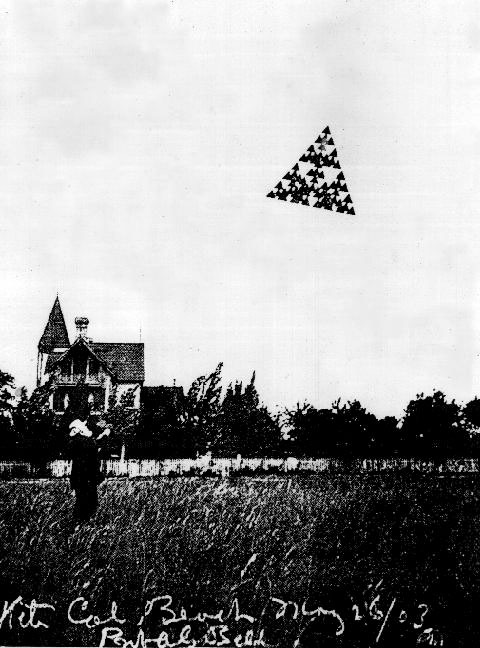
However, there are several ways to approximate a sphere as a collection of shapes you can flatten. For instance, you can project the surface of the sphere onto an icosahedron, a solid with 20 equal triangular faces, giving you what it is called the Dymaxion projection.

The Dymaxion map projection.
The problem with this technique is that you still have a sphere approximated by flat shapes, and not curved ones.
One of the earliest proofs of the surface area of the sphere (4πr2) came from the great Greek mathematician Archimedes. He realized that he could approximate the surface of the sphere arbitrarily close by stacks of truncated cones. The animation below shows this construction.

The great thing about cones is that not only they are curved surfaces, they also have zero curvature! This means we can flatten each of those conical strips onto a flat sheet of paper, which will then be a good approximation of a sphere.
So what does this flattened sphere approximated by conical strips look like? Check the image below.

But this is not the only way to distribute the strips. We could also align them by a corner, like this:

All of this is not exactly new, of course. In the limit, what you have is called a American polyconic projection, which does require stretching in order to fill the gaps between the ending of the strips. Gauss’s Theorema Egregium demands this.
But I never saw anyone assembling one of these polyconic approximations. I wanted to try it out with paper, and that photo above is the result.
It’s really hard to put together and it doesn’t hold itself up too well, but it’s a nice little reminder that math works after all!
Tuesday, 26 July 2016
Scale of the Universe
source
Tuesday, 14 June 2016
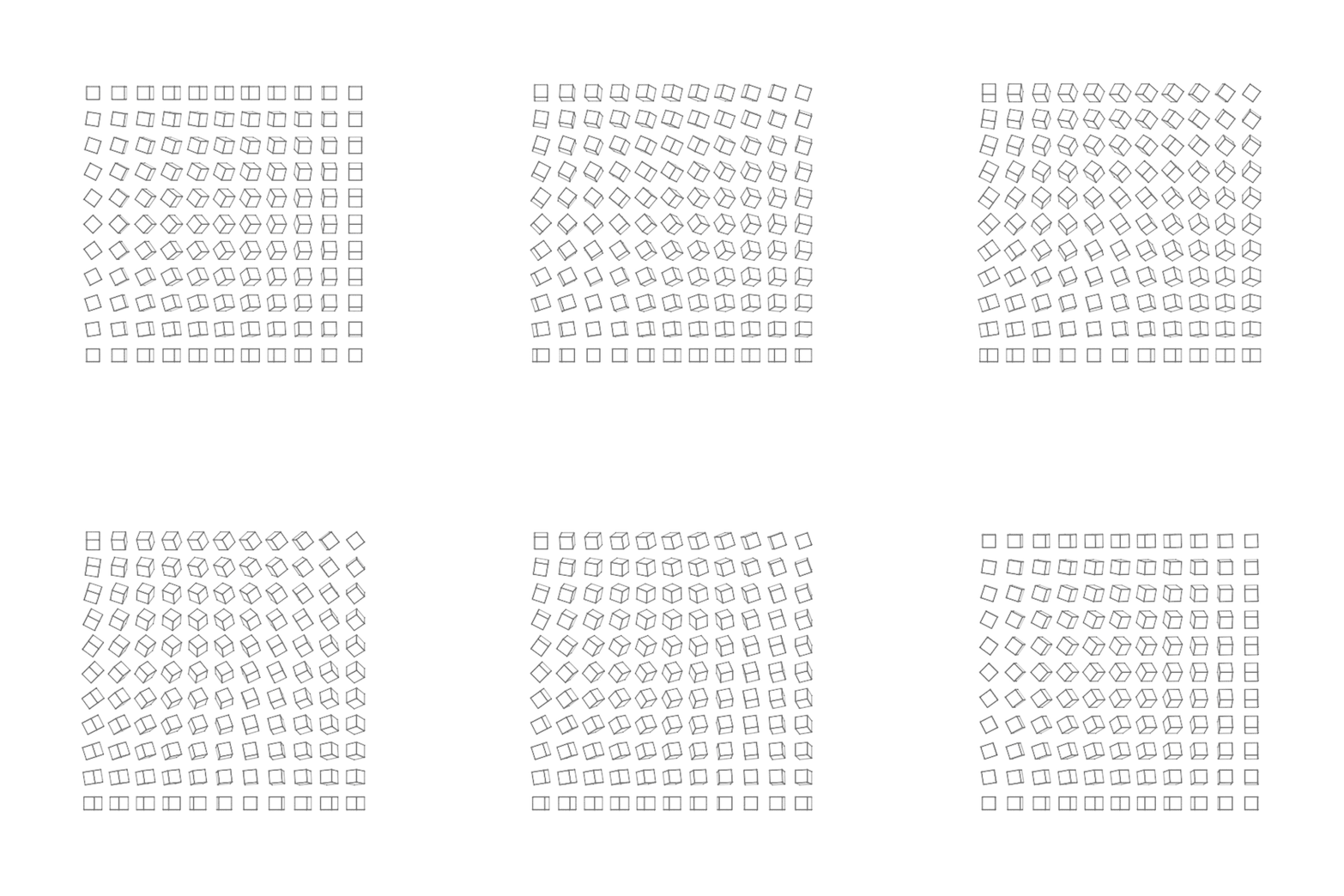
Warped 2D Grids
"Made out of thousands of tiny little triangles, these delicately
thatched composites strike a pleasing visual chord through their careful
balance of negative and positive space. Created by LA-based artist Katy Ann Gilmore,
the organic geometric images are realized through a variety of
influences including mathematics, nature, and visual art. The tiny
latched shapes spread outward until final pieces emerge, looking like
hand-crafted topographic maps.
Gilmore studied mathematics and visual arts, and the experience gained in each field shines through in her unique style. Her layered, two-dimensional drawings explore the concept of perpendicular planes and the distortion of three-dimensional space. Some areas of the images recede where others spring forward, creating the illusion of a finely woven net gripping the land's curvature.
Gilmore’s breathtaking work was initially inspired by a curiosity for how 2D grids would look when warped in all directions, and how the fluctuation of empty space around physical objects affects our perception of solidity. Her work draws thousands of tiny elements together to form beautiful realizations of mathematical concepts through the application of an artistic eye."
mymodernmet


Gilmore studied mathematics and visual arts, and the experience gained in each field shines through in her unique style. Her layered, two-dimensional drawings explore the concept of perpendicular planes and the distortion of three-dimensional space. Some areas of the images recede where others spring forward, creating the illusion of a finely woven net gripping the land's curvature.
Gilmore’s breathtaking work was initially inspired by a curiosity for how 2D grids would look when warped in all directions, and how the fluctuation of empty space around physical objects affects our perception of solidity. Her work draws thousands of tiny elements together to form beautiful realizations of mathematical concepts through the application of an artistic eye."
mymodernmet


Tuesday, 23 February 2016
Fruit Fractions
These images are great prompts for a maths session on fractions and patterns.
"Turkish artist Şakir Gökçebağ creates new geometric shapes by cutting into various fruits and vegetables. Each redefined shape in his series of food art is crafted with precision and aligned accordingly. The arrangements created by Gökçebağ present interesting patterns that are, no pun intended, a feast for the eyes!"


Tuesday, 16 February 2016
Learn to Write Numbers in Chinese
Here is a great website (thanks Dave!) where you can learn to write the Chinese characters for numbers: http://www.learnchineseez.com/characters/learn-to-write-chinese/

It then demonstrates how to write the characters from 1 through 10:

And explains how to write larger numbers - great for place value:

Saturday, 19 September 2015
Tile the Plane


Big math news! It’s been thirty years since mathematicians last found a convex pentagon that could “tile the plane.” The latest discovery (by Jennifer McLoud-Mann, Casey Mann, and David Von Derau) was published earlier this month. Full story.
Tuesday, 18 August 2015
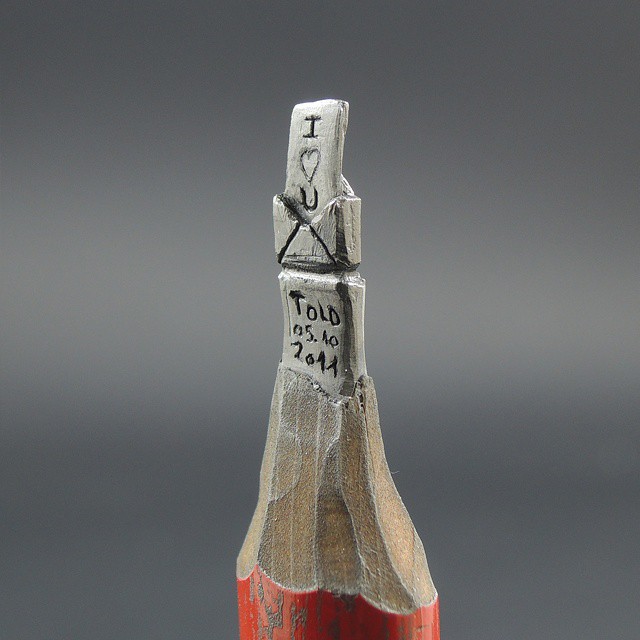
Tiny Pencil Tip Sculptures

From mymodernmet
"Ever since he was a child, Jasenko Đorđević (aka @TOLDart) has been drawn to miniatures. As an adult, this fascination grew, leading him to develop an incredible craft carving intricate sculptures from an unconventional material—graphite. Now, Đorđević transforms the tips of pencils into small works of art, depicting subjects like flowers, animals, and portraits, all of which have to be magnified to fully appreciate the minute details.
To craft these awe-inspiring works, the Bosnian artist uses an X-acto knife and tiny chisel. With these simple sculpting tools he creates their overall form, implies texture, and even carves tiny words into the thin stick of graphite. This expert handling creates the illusion that these artworks were made from another material. The graphite resembles a dark, hard stone, and from up close, you might never know they're composed of something quite as simple as an ordinary pencil."




Subscribe to:
Comments (Atom)