This is great for discussions/examples of magnets and force.
Showing posts with label Oddities. Show all posts
Showing posts with label Oddities. Show all posts
Wednesday, 25 May 2016
Magnets and Marbles
This is great for discussions/examples of magnets and force.

Tuesday, 8 March 2016


Tuesday, 23 February 2016
Fictional Characters Infiltrate Art
TheGnarledBranch has inserted fictional characters into idyllic paintings... What kind of stories could your students come up with using this as a prompt? What fictional characters could they insert into famous art works?


Wednesday, 16 September 2015
Days of the Year
Here is a website which lists all of the different days of the year. Some examples include Cheeseburger Day (18th September), World Humanitarian Day (19th August), Save Your Hearing Day (31st May), and Learn Your Name in Morse Code Day (11th January)!
https://www.daysoftheyear.com/
https://www.daysoftheyear.com/
Saturday, 8 August 2015
14 Bizarre Animals That Could Totally Pass as Pokemon

Jerboa
Jerboas are hopping rodents that thrive in the deserts of Northern Africa and Asia. Despite their status as prey animals, these adorable kangaroo-like creatures make do just fine thanks to their excellent hearing and ability to run up to 15 miles per hour.
* * *

Mantis shrimp
Also known as "thumb splitters," these vibrant crustaceans are named in honor of their powerful claws, which can spear, stun and dismember prey with 200 pounds of force. In addition to their predatory tendencies, mantis shrimp are also distinguished for their impressive visual capabilities. The eyes of these psychedelic sea critters are equipped with 12 color receptors — humans and most other animals only have three. Scientists speculate this might enable them to process color information quickly within the eye instead going through the brain.
* * *
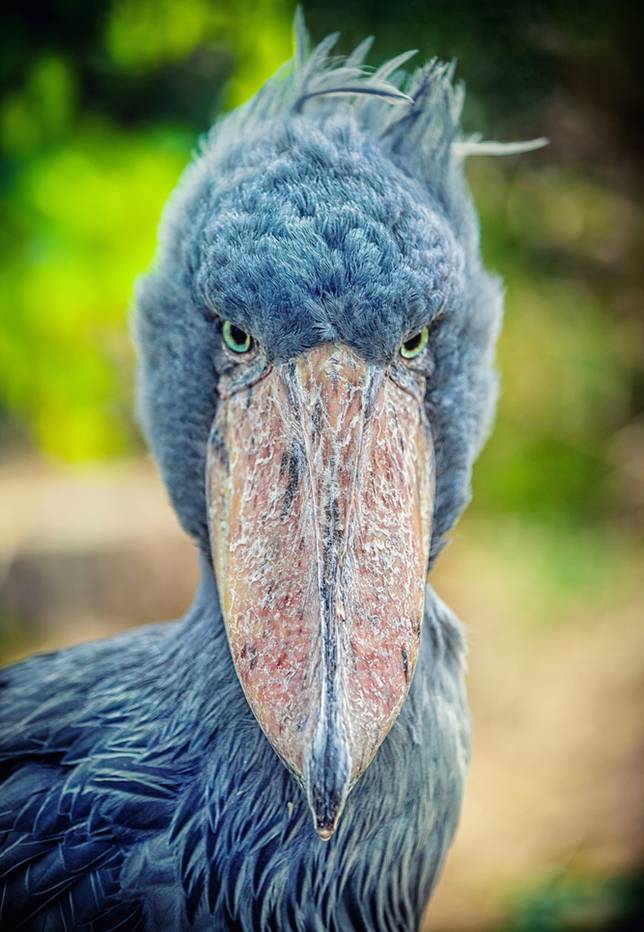
Shoebill stork
Native to the freshwater swamps of tropical east Africa, these large, cartoon-like avians are known for their uniquely bulbous beaks. They are classified as a "vulnerable" species due to human disturbances, habitat destruction and hunting.
* * *

Blobfish
The frowning, gelatinous blobfish is considered one of the world's ugliest animals, but it actually looks quite different in its native deep sea environment. As a frequent victim of bycatch, the sad, slimy creature may soon be added to the growing list of endangered species.
* * *

Gharial
The long, thin jaw of the gharial may appear quite frightening to many folks, but have no fear — it is an adaptation developed in response to the creature's fish-heavy diet. Sadly, the global population numbers for this critically endangered Indian crocodile are currently estimated at less than 235 individuals, due to loss of their river habitat, depletion of food sources and fishing nets.
* * *

Fennec fox
Hailing from the arid, scorching sands of the Sahara desert, these cute nocturnal canids are known for their extra large ears, which dissipate heat and are sensitive enough to allow them to hear prey from underground.
* * *

Glaucus Atlanticus
You might be surprised to learn that this beautiful sea critter (also known as a sea swallow or blue dragon) is actually a sea slug. The blue and silvery mollusk is known to feed off cnidarians like the venomous Portuguese Man o' War. What makes these gorgeous slugs even more fascinating is their practice of storing the cnidarians's stinging nematocysts within its own tissues — ensuring a painful sting to anyone who messes with it.
* * *

Okapi
These unusual creatures were once mistaken by early European explorers as "African unicorns" before being formally recognized and classified as Okapia johnstoni in 1901. Although they may bear zebra-like stripes, these endangered ungulates are more closely related to giraffes.
* * *

Bush viper
Found in the tropical rainforests of subsaharan Africa, bush vipers are venomous snakes known for their distinctly keeled scales. Their strong prehensile tails are perfect for supporting their weight in trees, where they spend the majority of their lives hanging and ambushing their prey.
* * *

Proboscis monkey
The clown-like, bulbous nose of this arboreal Old World monkey is hard to miss. Often exceeding 4 inches, the prominent proboscis is a result of sexual dimorphism; it is only found in males.
* * *

Lowland streaked tenrec
This quirky little guy is native to the tropical lowland forests of eastern Madagascar. The streaked tenrec is equipped with two sets of quills: barbed and nonbarbed. Similar to a porcupine, the barbed quills are used as a means of a defense against predators. The nonbarbed quills, on the other hand, are vibrated in order to emit a faint chattering that is used to communicate with family.
* * *

Coconut crab
Make no mistake — those tree trunks seen above are not saplings. That's right, those crabs are huge! Growing up to a meter in length from leg to leg, these terrestrial hermit crabs are the largest land-living arthropods in the world. Although they are omnivores that have been known to consume turtle hatchlings, they generally prefer to eat fleshy fruits and, you guessed it, coconuts!
* * *

Hummingbird hawk-moth
With its humming, hovering and long, thin proboscis, it's no wonder this species is having an identity crisis. That said, Macroglossum stellatarum is most definitely a moth, and its resemblance to a hummingbird is the result of convergent evolution.
* * *

Giant isopod
Along with the giant squid and the Japanese spider crab, these squirm-inducing arthropods are a prime example of deep sea gigantism. If you're not familiar with the giant isopod, look no further than the common wood louse, which is its terrestrial cousin. Both species have the ability to curl up into a ball to protect themselves from predators.
Wednesday, 5 August 2015
The Mathematics of Words
Eighty-eight
In the standard English counting system (so
no googols, googolplexes or myriads included), every single number higher than
88 has an N in its name. So put another way, eighty-eight is the highest number
spelled without a letter N. Incidentally, you’d have to count all the way to a
billion before you’d need to use a letter B; and no matter how high you counted
you’d never need a J, a K, or a Z.
Forty
Forty is the only number in the English language to have its letters in alphabetical order. The only number with its letters in reverse alphabetical order?One.
Four
Four has 4 letters, making it the only self-enumerating number in English. Bonus fact: there are no self-enumerating numbers in French.
Quadruplications
Meaning “multiplications by four,” the word quadruplications contains, among others, the eight letters N, O, P, Q, R, S, T, and U inside it. No English word is spelled used a longer string of consecutive letters.
Lull
Seventy-five percent of the word lull is the same letter. No word in the English language contains a greater proportion of repeated letters, although a handful of others—like loll, faff and sass—equal it.
Swims
Rotate the word SWIMS, in all capital letters, 180 degrees, and it will still more or less read SWIMS, making it the longest rotationally symmetrical word in the English language. The word dollop runs one letter longer, but its Ls drop below the line when turned upside down.
AND...
Divide the alphabet into two 13-letter halves, from A-M and from N-Z. Then number all of the letters in each half from 1-13, starting at opposite ends—so A and Z are both 1, B and Y are 2, C and X are 3, and so on. This would make W 4, and D 4. I and R would both be 9. And A and Z would both be 1. What does all that mean? Well, it makes wizard one of the longest symmetrically distributed words in the English language, as its letters would form the numerical pattern 4/9/1/1/9/4. Hovels (8/12/5/5/12/8) and evolve (5/5/12/12/5/5) are two more six-letter examples.
Wednesday, 22 July 2015


Wednesday, 1 July 2015
Comfort/Discomfort
Artist Sarah Duyer creates ceramic pieces which mix the everyday with the slightly uncomfortable.


'In my work I explore the dichotomy of comfort and discomfort. Through altering certain elements in that formula, such as surface texture and form, I hope to jar the viewers and force them to feel discomfort. Teeth and fingernails and skin sculpted from stoneware and glazed with a glossy finish create a confusing and sometimes grotesque take on a clean silhouette. By using natural, organic forms and playful themes in combination with harsher imagery, I attempt to create work that takes a closer look at anxiety and the human condition. I try to combine my personal, more lighthearted, style with more serious themes in order to present my individualistic interpretation of my environment.'


Subscribe to:
Posts (Atom)